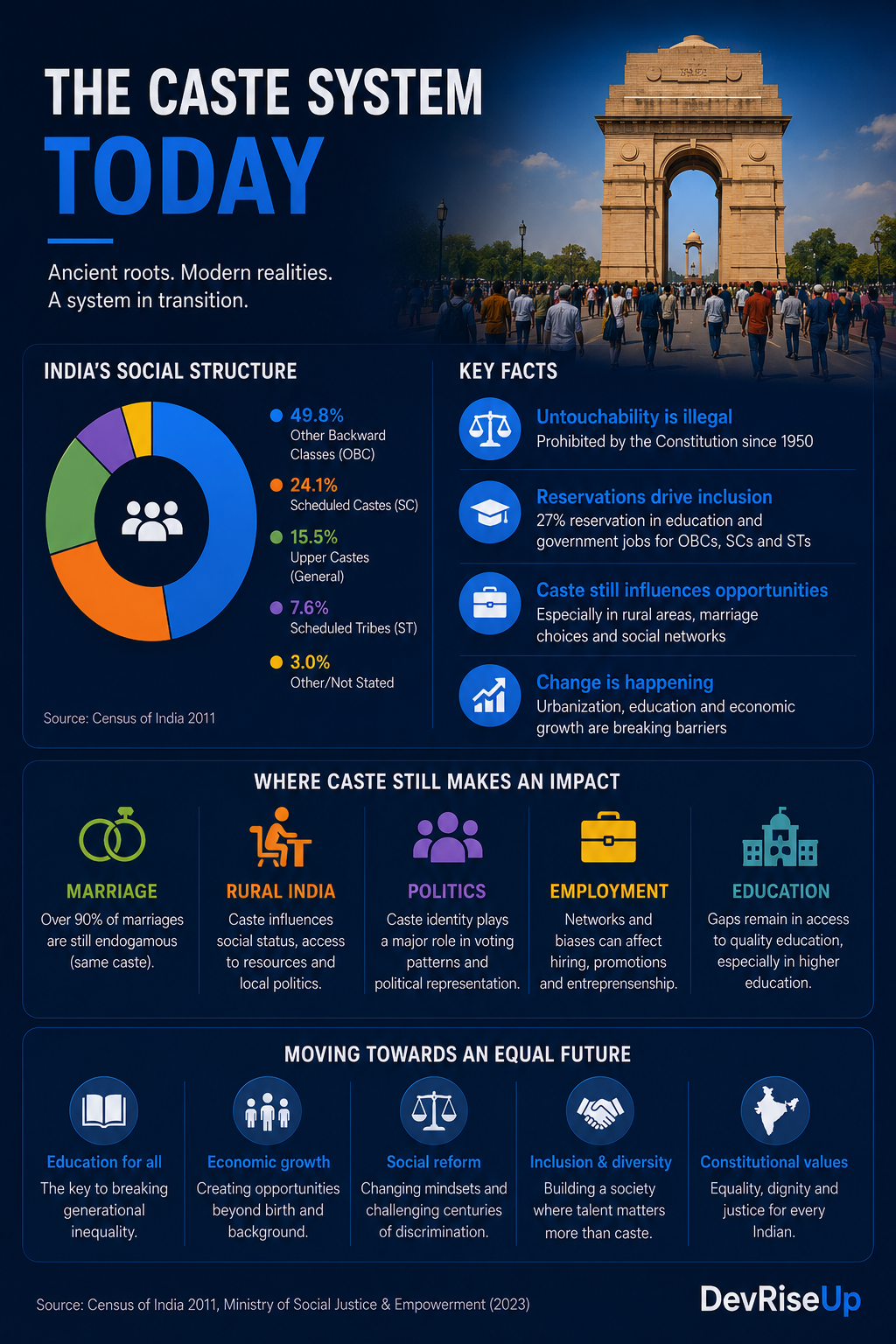
India's caste system is one of the most widely misunderstood social structures there is. Anyone who dismisses it as a relic of the past is wrong. Anyone who describes it as an ever-present obstacle is equally wrong.
The reality is more nuanced — and, on certain points, relevant for DACH companies.
Historical Basic Structure
The classical system comprises four Varnas: Brahmins (priests, scholars), Kshatriyas (warriors, rulers), Vaishyas (traders, farmers) and Shudras (service providers). Outside this structure stood the Dalits — formerly referred to as "untouchables", today one of the most strongly protected groups under Indian law.
Over the centuries, this Varna division has splintered into thousands of sub-castes (Jatis), which vary considerably by region. A Brahmin from Tamil Nadu and a Brahmin from Uttar Pradesh share the umbrella term, but hardly any marriage patterns or social networks.
Legal Position: Abolition and Compensation
Article 17 of the Indian Constitution of 1950 explicitly prohibits discrimination on the grounds of caste. This is no empty formula — the state sanctions caste discrimination. The Scheduled Castes and Scheduled Tribes (Prevention of Atrocities) Act of 1989 provides criminal-law protection for historically disadvantaged groups.
At the same time, India has introduced a comprehensive reservation system: 22.5 per cent of places at universities and positions in the public service are reserved for Scheduled Castes and Scheduled Tribes, with a further 27 per cent reserved for Other Backward Classes (OBC). In total, this means that around 49.5 per cent of state positions are allocated according to caste affiliation.
This system is a hot political topic. It has enabled generations of disadvantaged people to rise socially. It has also contributed to a reverse politicisation of caste affiliation.
The Reality of Everyday Business Life
In the private IT sector — the area most relevant to DACH companies — caste is officially irrelevant. Hiring decisions are based on qualifications and interview performance, not on background.
Unofficially, caste is sometimes still present — via surnames, via networks, via social closeness between colleagues from the same community. This is rare, does happen, and is barely recognisable to foreign managers.
What foreign executives should know: surnames in India often reveal regional and caste-linked origins. This does not imply discrimination, but it is part of the social code that Indians read intuitively. Outsiders should be aware of this code — without reproducing it.
What One Should Not Do
Asking a colleague about their caste affiliation is inappropriate in a professional context. This also applies to indirect questions ("Where does your surname originally come from?" as an attempt to identify caste).
Indians who are socialised in international business expect foreigners not to raise this topic. Anyone who unwittingly enters into a discussion and is asked about the subject fares better with genuine interest than with ready-made opinions.
| Group | Official Term | Share of Population (approx.) | Reservation Quota (Federal) |
|---|---|---|---|
| Scheduled Castes | SC (Dalits) | ~16.6% | 15% |
| Scheduled Tribes | ST | ~8.6% | 7.5% |
| Other Backward Classes | OBC | ~40–50% | 27% |
| General Category | General | ~25–35% | 0% |
Sources: Census of India 2011, National Commission for Backward Classes — as of 2024
About the Author