The critical phase that could have saved 44% of all failed IT projects
Between 30 and 50 per cent of all outsourcing projects fail – a frighteningly consistent figure for years. According to the Standish Group, the main cause is inadequate requirements gathering: incomplete specifications, lack of user involvement, unrealistic expectations. The Project Management Institute confirms that 37 per cent of failed projects could have been saved with clear requirements.
In over half of all IT projects examined, the end product no longer met the original objectives – with disastrous consequences: wasted budget, frustrated teams and lost opportunities.
The good news: these mistakes are avoidable. The success of a project is not decided during development, but in the first few weeks.
Why the initial phase is crucial
Our experience from numerous projects clearly shows that successful outsourcing projects are won or lost in the planning phase. Many providers rush into implementation too quickly – we deliberately invest in a systematic setup. This time pays off many times over: through fewer misunderstandings, realistic schedules and software that actually does what it is supposed to do.
This preparation is particularly crucial for offshore or nearshore projects. Cultural differences, time zones and distance exacerbate any ambiguities. What can be clarified in a conversation within a local team can quickly lead to days of misunderstandings internationally.
The DevRiseUp system: Phase 1
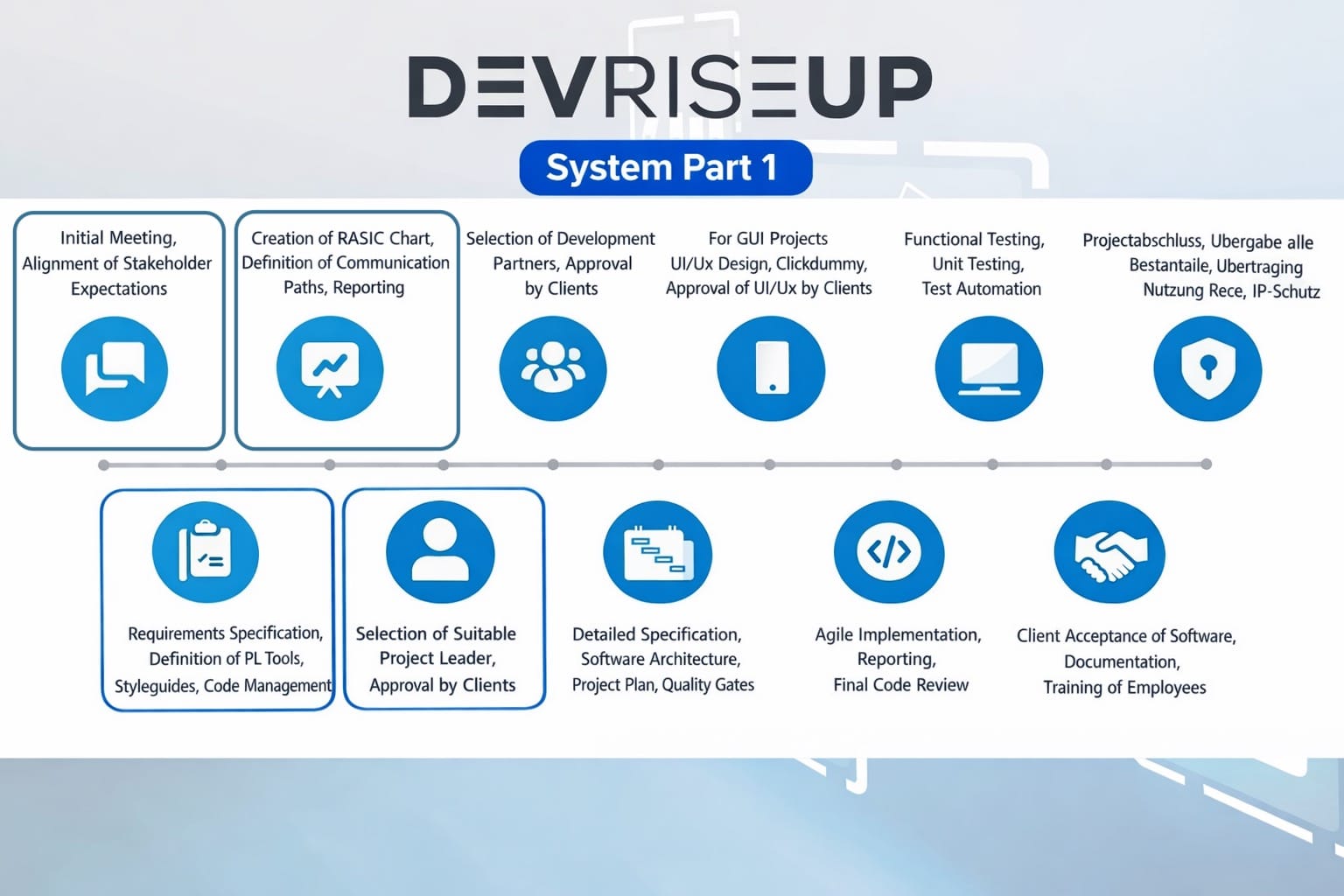
Our method starts with six clearly structured steps that lay the foundation for every successful project.
1. Free initial consultation
Before we start, we conduct an open initial consultation – not a sales pitch, but a reality check: Do the project and expectations match? Are there any pitfalls that we need to defuse together? At the end, there is a conscious decision – on both sides.
2. Stakeholder alignment
We identify all relevant stakeholders, from end users to management, and systematically align expectations. This allows us to avoid the most common criterion for failure: differing ideas about what "success" means.
3. Professional specification creation
Many customers do not have the time to create detailed specifications, and it is not something that can be done "on the side". We take care of this work for you.
Especially in international projects, the specifications must be more precise than for local teams: any ambiguities that would be compensated for culturally by intuition must be documented here. You remain the product owner and retain control; we deliver the structured elaboration. This reduces effort and ensures project success.
4. Tools and standards
Together, we define which tools, style guides and code standards will be used. This creates a uniform "state of work" – transparent, efficient and without subsequent friction losses.
5. RACI chart and communication structure
Who is responsible, who decides, who is informed? We establish this clarity at the outset. The result: clear roles, defined communication channels and reporting that keeps you up to date at all times.
6. Project manager selection with customer approval
The project manager is at the heart of an outsourcing project. We select suitable candidates based on technology, experience and personality – and you give the final approval. Trust in the person responsible is the most important factor for success.
The DevRiseUp difference
Three things make our approach unique:
1. Project responsibility instead of ticket processing
We take real responsibility for success – not just for individual tasks.
2. British project management with international implementation
You communicate with experienced British project managers who understand your business culture and at the same time build bridges to international teams.
3. A systematic approach based on experience
Every step is based on lessons learned from decades of project experience – including those that failed. We have developed a robust system that minimises risks and creates transparency.
What happens next
This first phase lays the foundation. In the second part of the series, we will show how the DevRiseUp system shapes the transition from planning to implementation: from the selection of development partners to team composition to international architecture validation.
Are you ready to put your next outsourcing project on a solid footing?
Contact us for a free initial consultation with full transparency.
About the Author